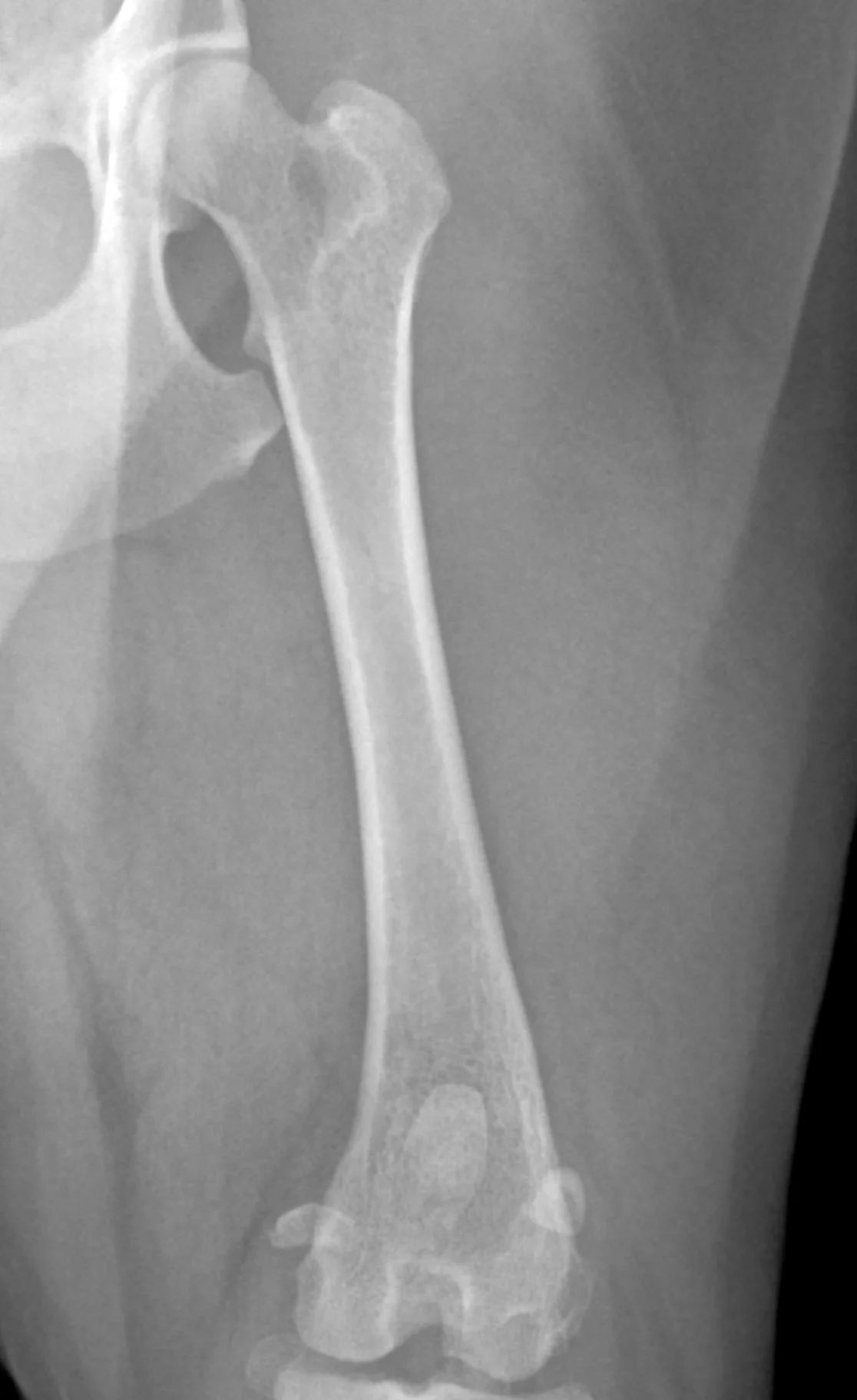
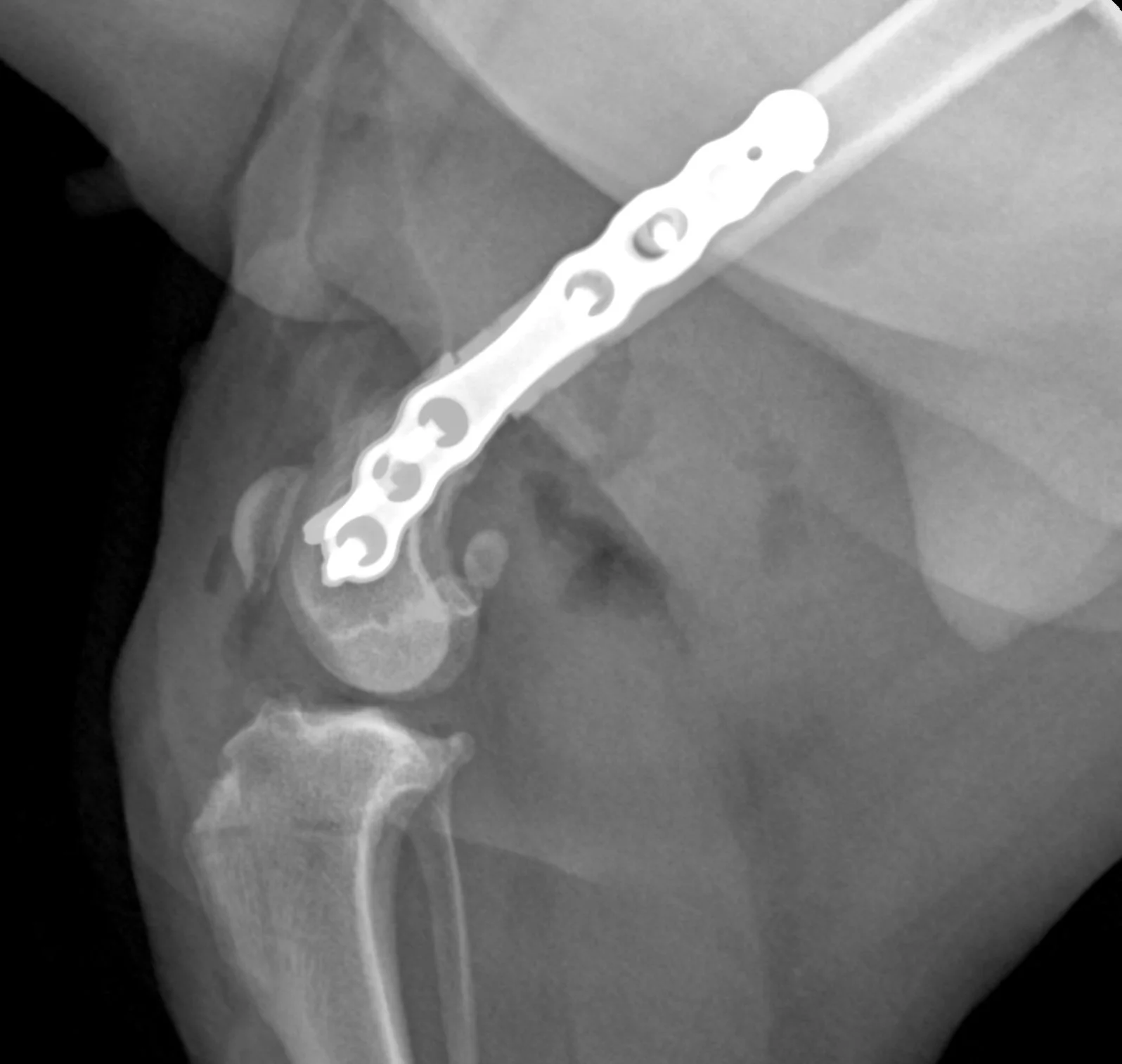
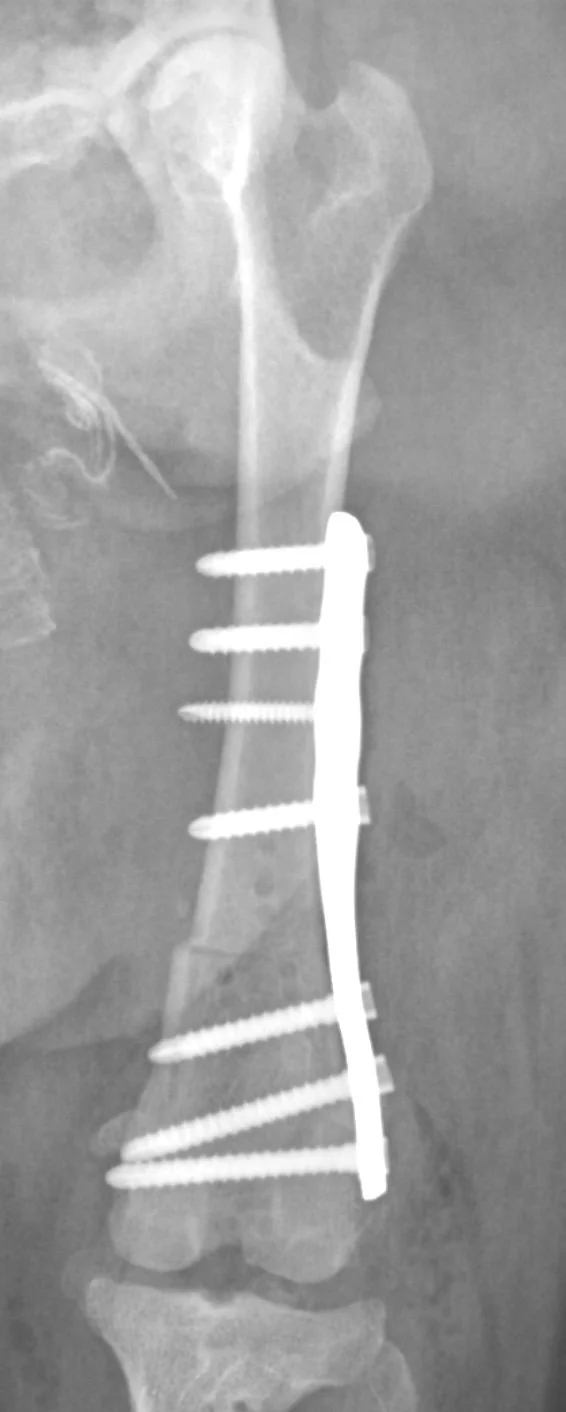
Medial patella luxation is a common orthopaedic condition in small breed dogs, but recurrent or persistent luxation can sometimes be associated with underlying angular limb deformity. In this case, a Pomeranian presented for revision surgery following previous medial patella luxation correction, with distal femoral varus identified as a contributing factor. Vet Forge assisted Brisbane Veterinary Specialist Centre (BVSC) by digitally planning a patient-specific distal femoral osteotomy guide to help improve the accuracy, efficiency and predictability of the correction.
Digital Planning and Osteotomy Simulation
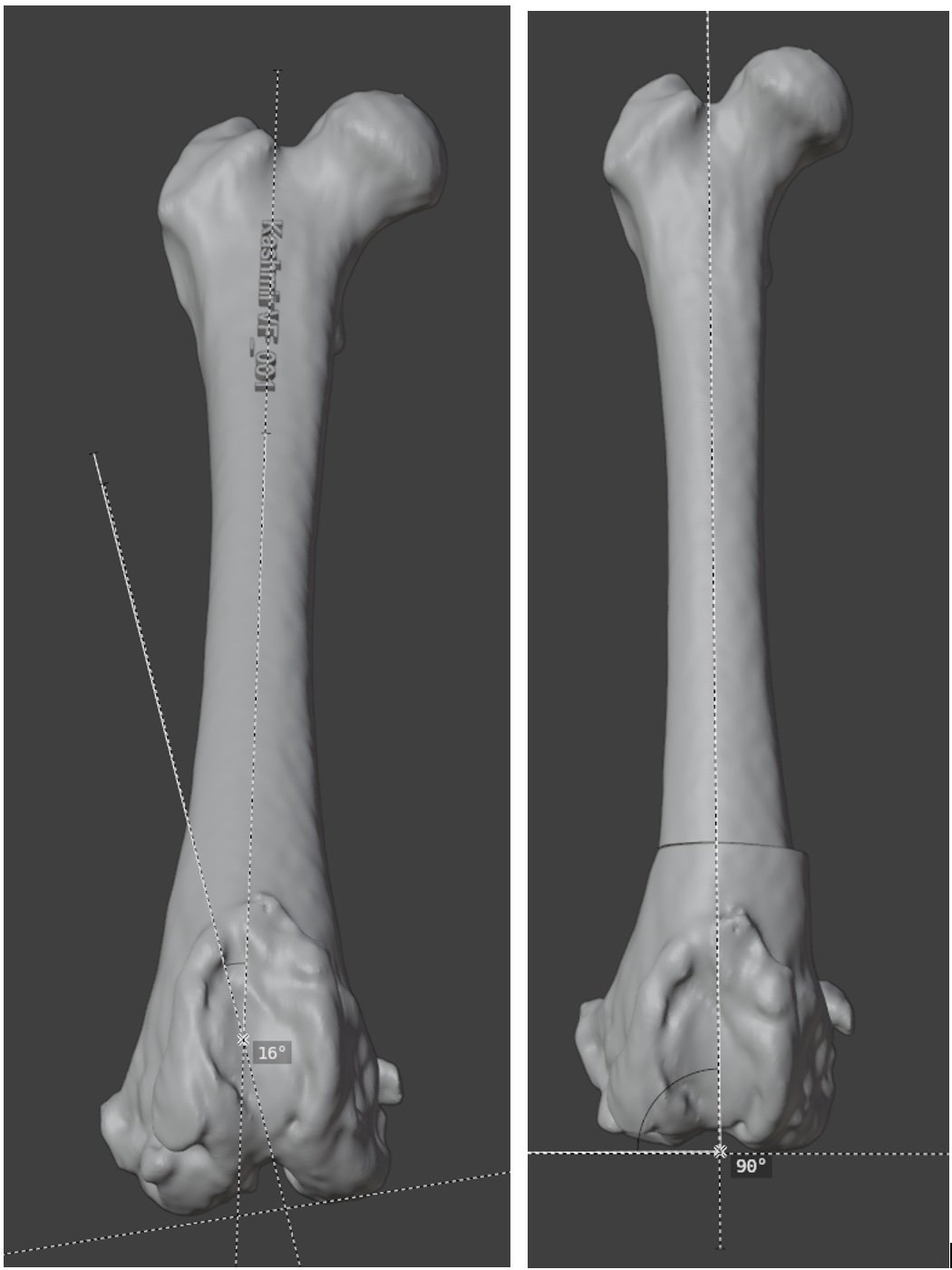
The CT images were translated into a 3D CAD model, where the distal femoral varus could be assessed and the corrective osteotomy planned. The pre- and post-correction models shown here demonstrate the intended change in femoral alignment before the surgical guide was designed.
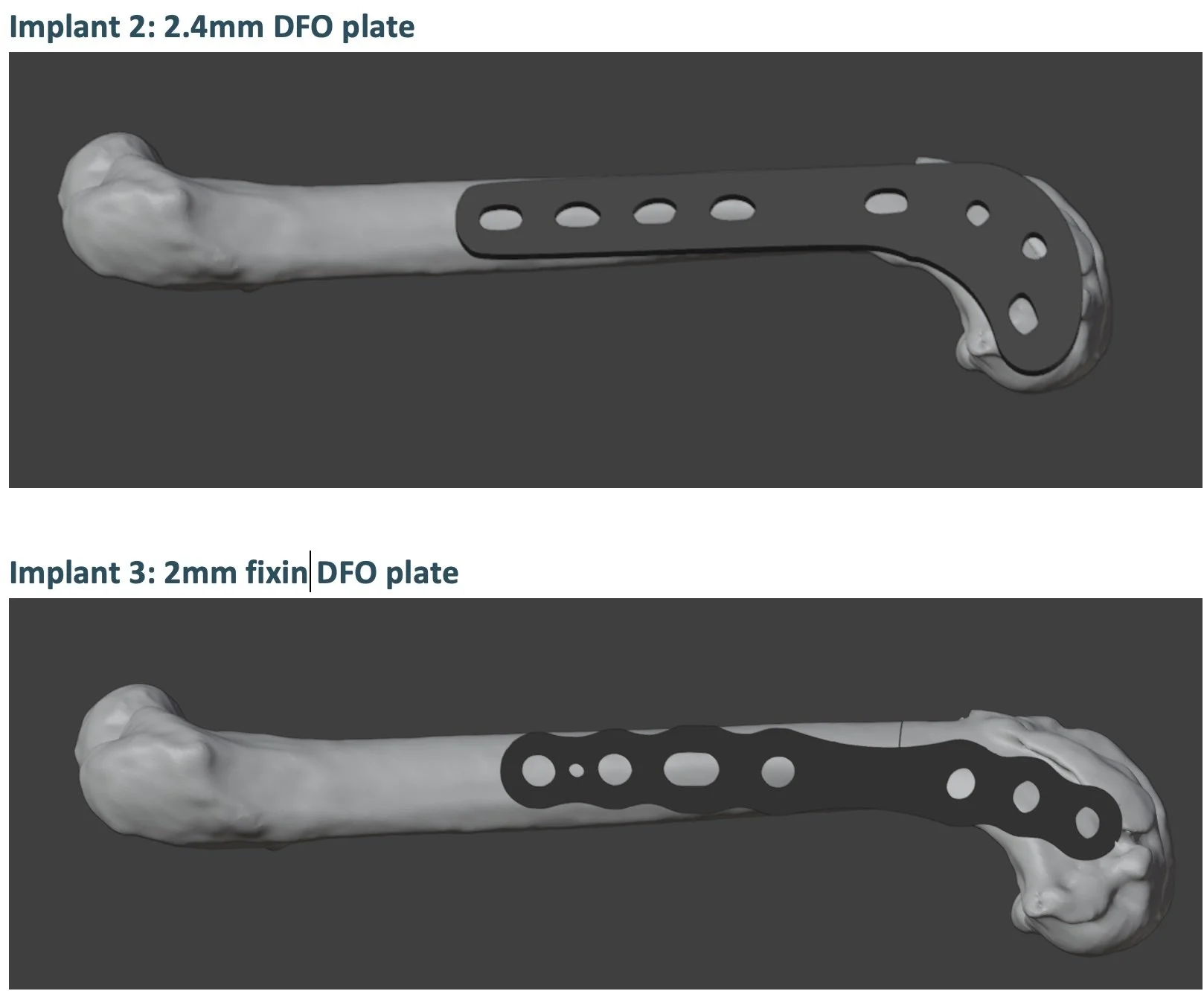
Implant planning and pre-contouring
The proposed implant position was planned digitally to assess plate size and fit. A 3D-printed bone model was then used to pre-contour the plate before surgery, reducing the need for intra-operative plate adjustment.
Bone Model and Patient-Specific Guides
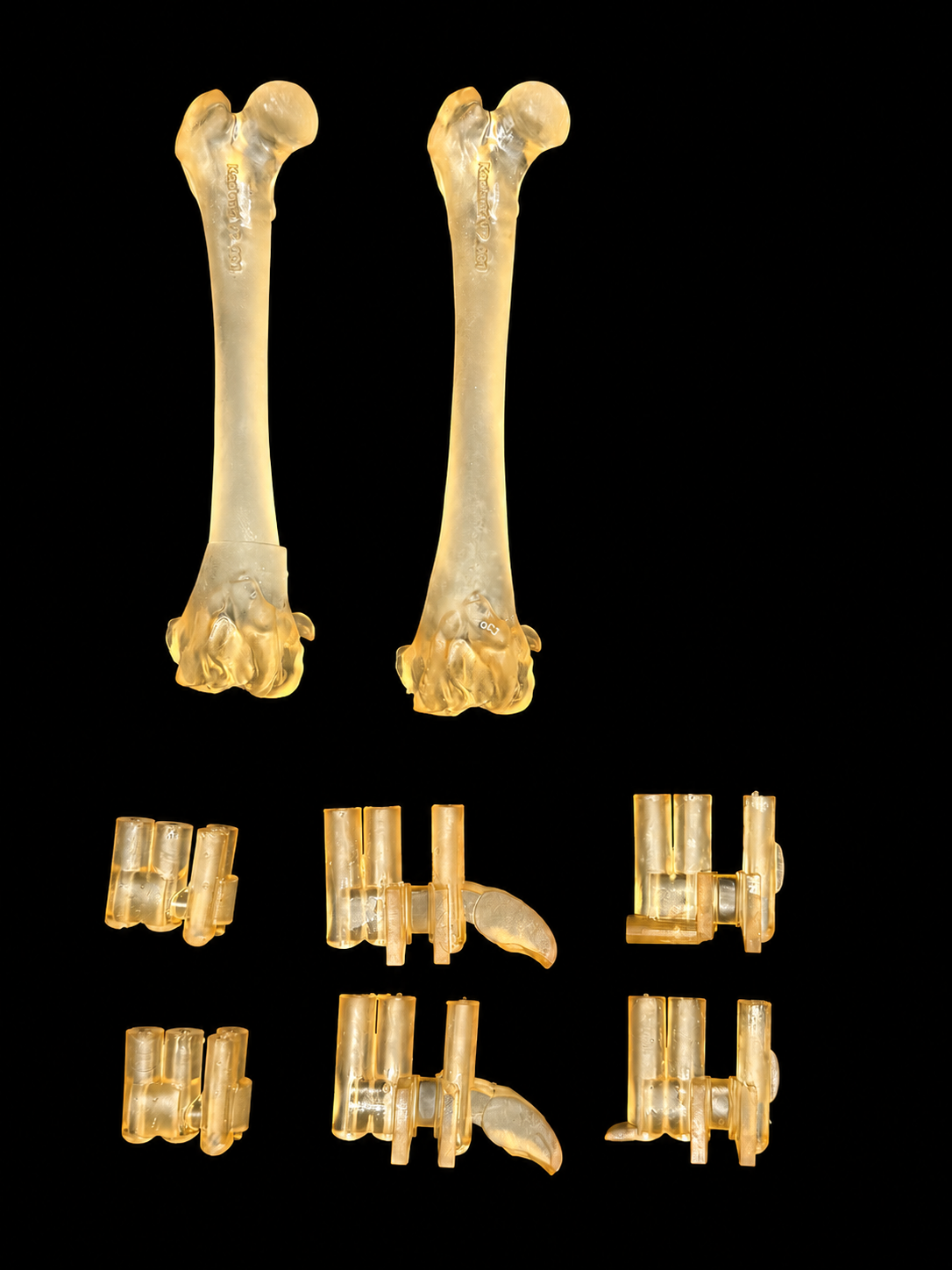
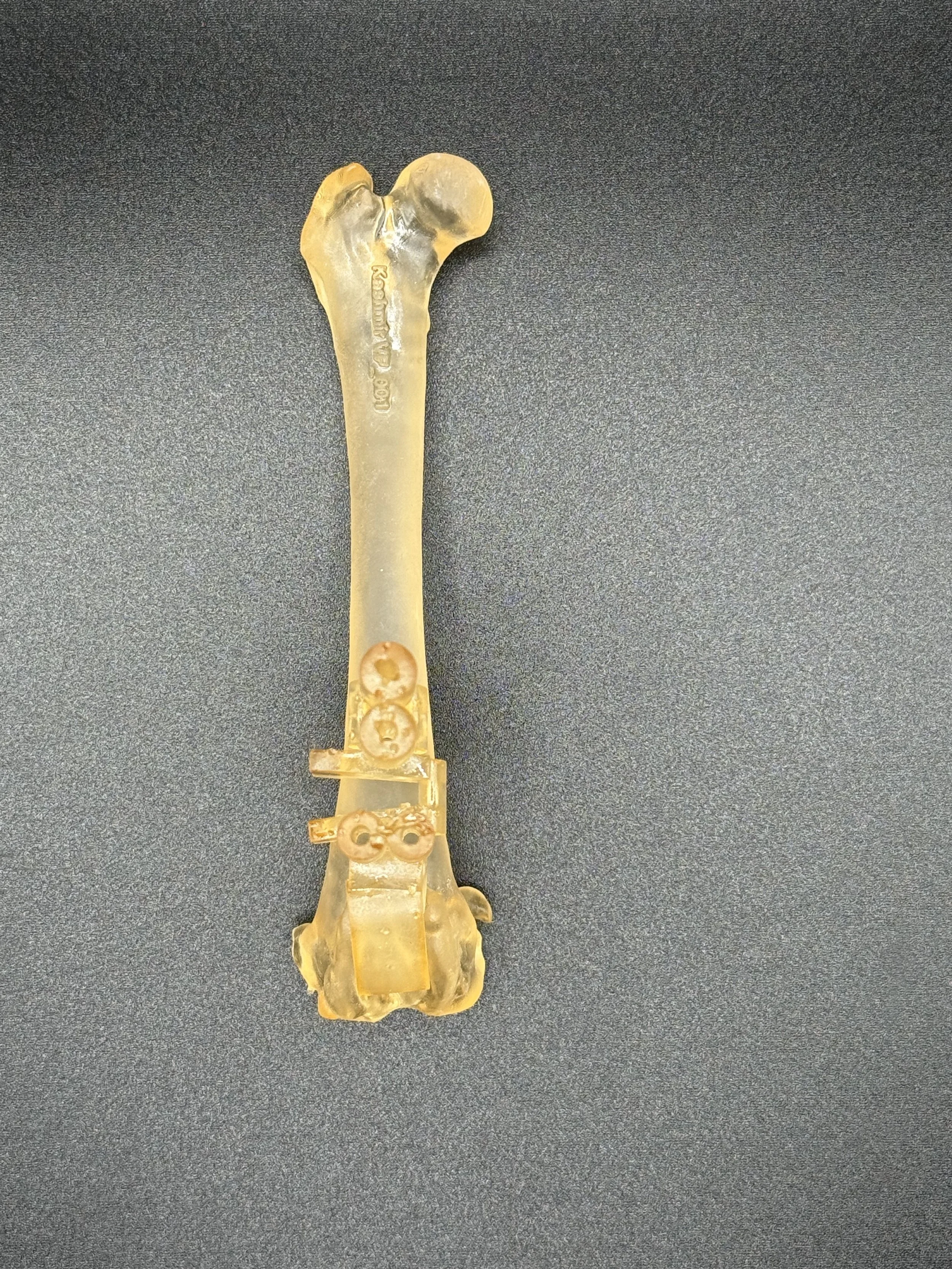
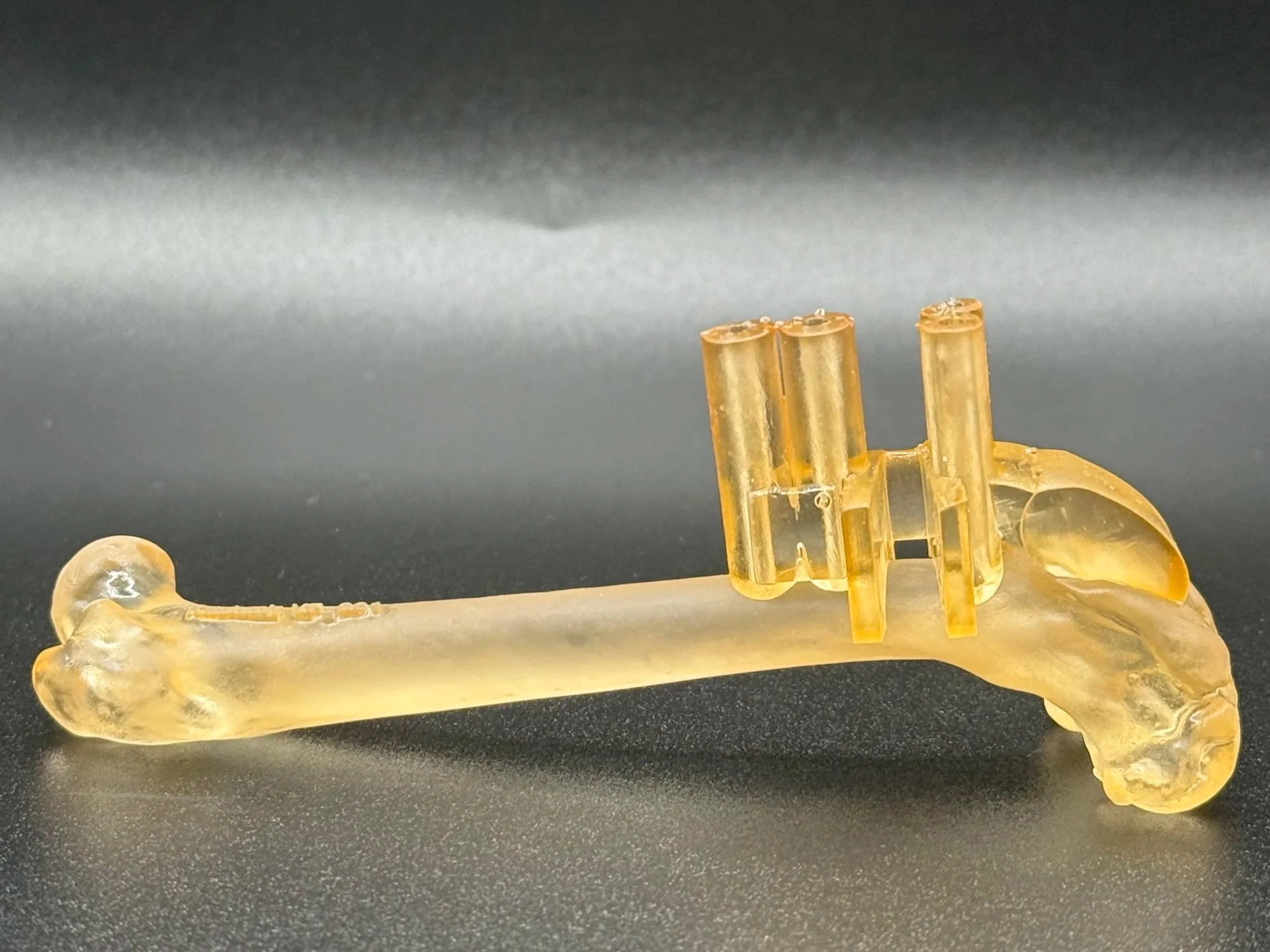
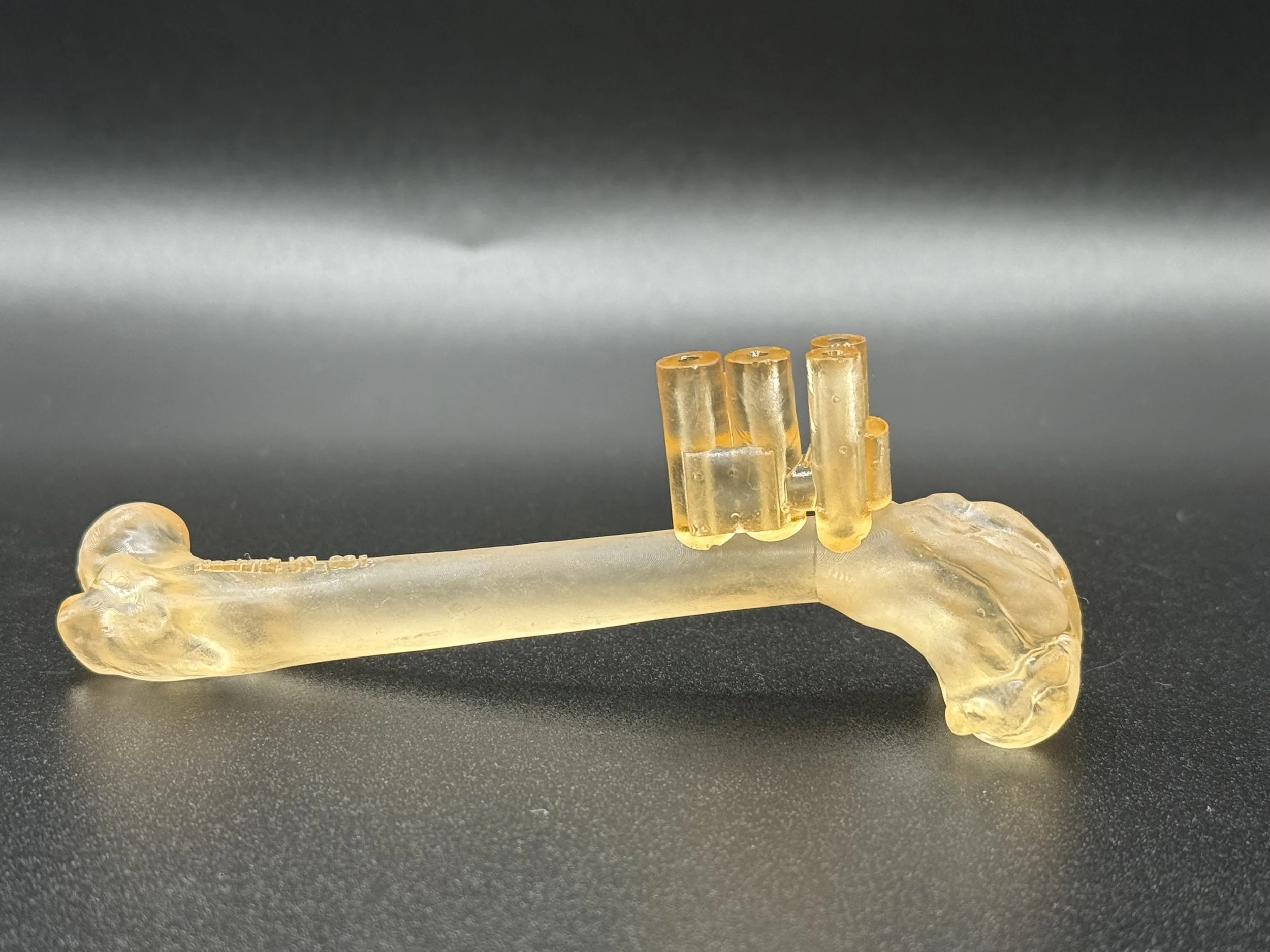
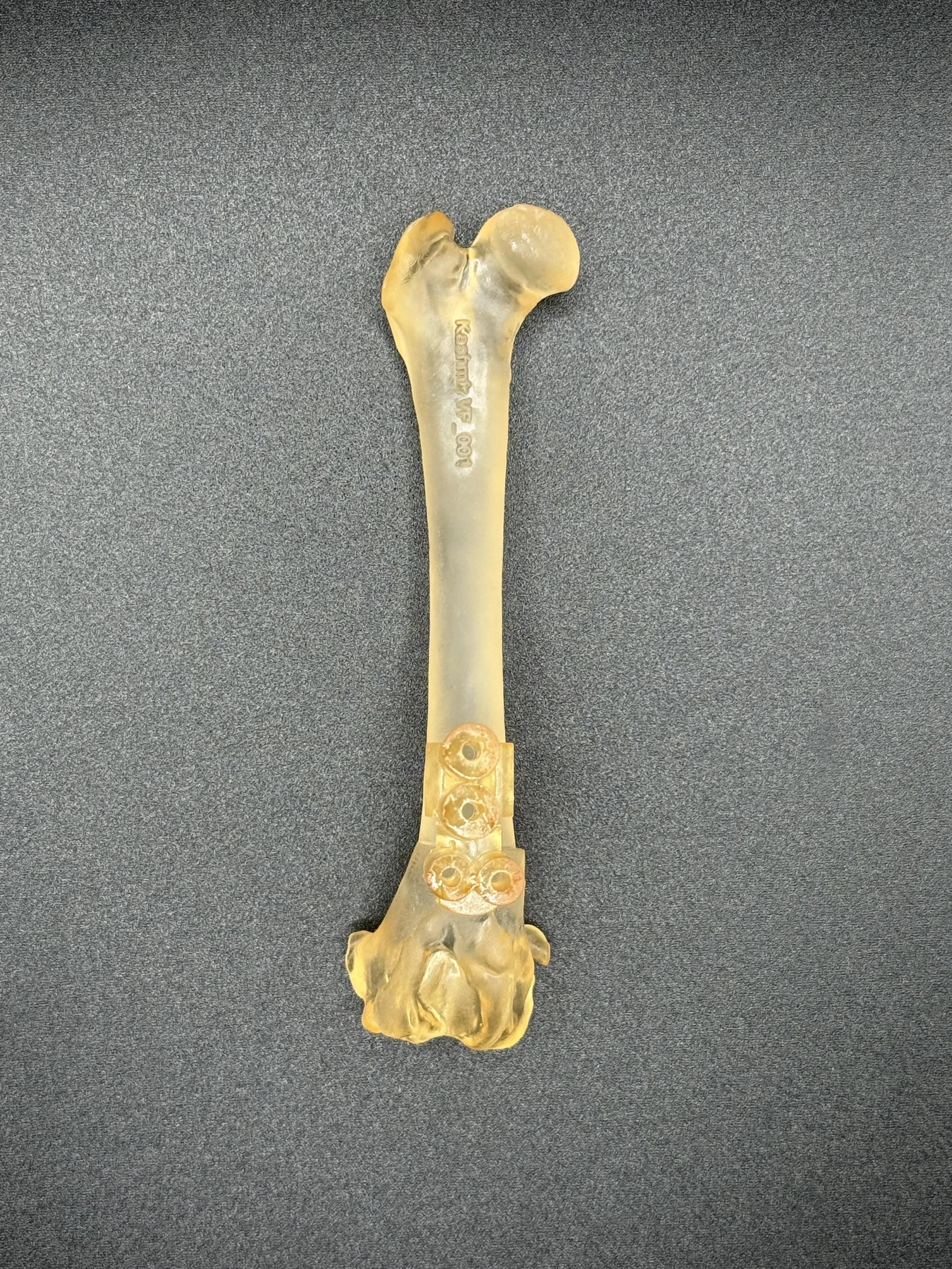
A 3D-printed bone model, osteotomy guide and reduction guide were produced for the case. As previous trochleoplasty had been performed, a backup osteotomy guide was also created in case the trochlear footprint did not fit intra-operatively due to osteophytes or surface changes not fully captured during CT segmentation.
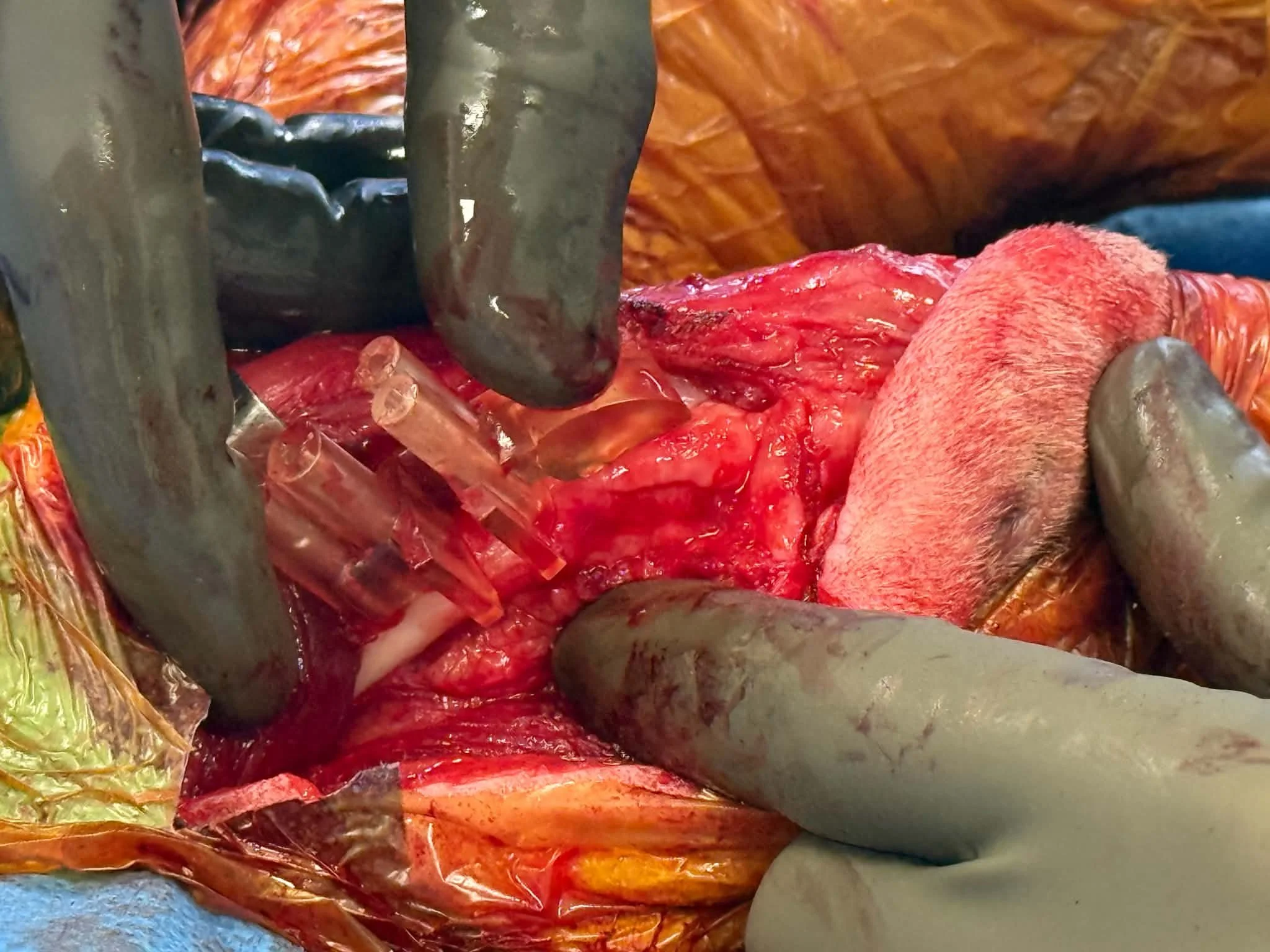
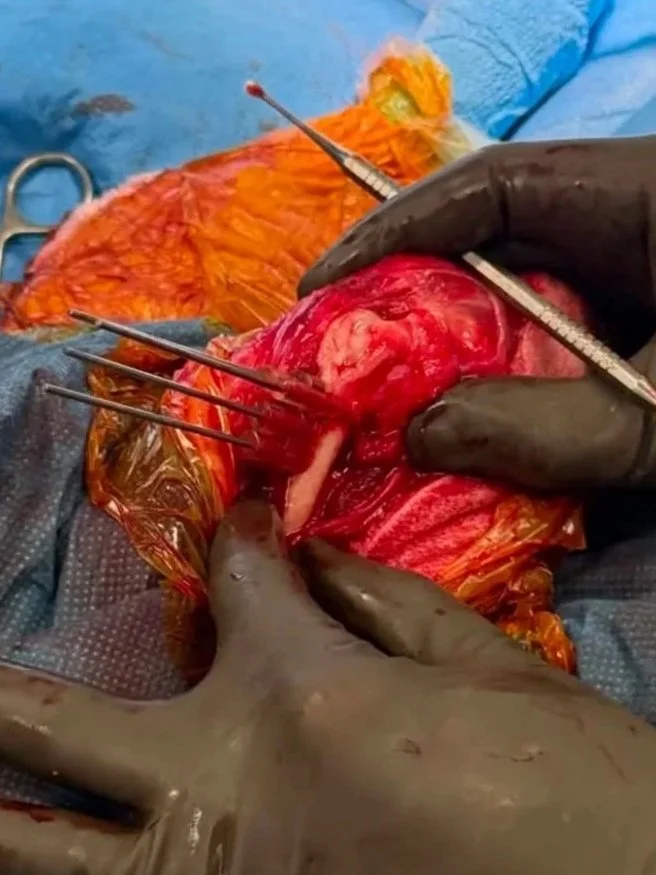
The osteotomy guide was fitted intra-operatively and temporarily stabilised with positive-profile threaded pins, allowing the planned osteotomy to be accurately translated from the digital model to surgery.
Surgical Outcome
The surgery was performed by Dr Harvey Saunders from BVSC and went seamlessly. The post-operative radiographs demonstrated an excellent correction and implant position, closely reflecting the planned alignment.
This case is a great example of how patient-specific planning and 3D-printed surgical guides can support complex orthopaedic procedures, especially in small patients where precision is critical.